
Dentures – Danville, CA
Rebuild a Beautiful, Functional Smile
Tooth loss can reduce your quality of life and lead to a number of health complications. The good news is that modern dentistry offers some truly top-notch tooth replacement options, including dentures. Here at Main Street Family Dental in Danville, we are proud to offer this treatment to patients in our community. To learn more about dentures and how they may be able to benefit you, contact our team to request an appointment. We look forward to helping you rebuild a beautiful, functional smile!
Why Choose Main Street Family Dental Danville for Dentures?
- Advanced Dental Technology
- Compassionate & Detail-Oriented Team
- Beautiful, Functional Tooth Replacement
Who’s a Good Candidate for Dentures?

Missing teeth can have consequences for almost every aspect of your life, including your dietary choices, the way you feel about yourself, and more. Fortunately, dentures are often able to address such issues regardless of how you lost your teeth. Almost anyone can get dentures, and they may be right for you if you are looking for a cost-effective, efficient, and aesthetically pleasing way to regain a complete smile. When you visit us for a consultation, we will let you know for sure whether dentures are right for you.
Effects of Missing Teeth

Teeth are usually lost due to tooth decay, gum disease, or oral injuries, and since the teeth in an arch all work to support one another, the loss of one will adversely affect the others. Replacing lost teeth sooner can prevent unpleasant effects such as:
- Speech difficulties: Many vocal sounds require the tongue, lips, and teeth to work together to be formed, so tooth loss can make it difficult to pronounce certain words.
- Loss of alignment: The teeth maintain their alignment in part by bracing one another. The loss of a tooth can lead to the neighboring teeth shifting out of place, which can make them harder to clean and more vulnerable to injury, decay, and further tooth loss.
- Further injury: The teeth are arranged to distribute the pressure of chewing amongst themselves. The loss of one tooth can shift its share of the chewing pressure to the other teeth, which can result in injuries.
What Qualifies You for Dentures?

Dentures may be an excellent option for you if you have lost many teeth, deal with uncomfortable dental sensitivity, or have extensive tooth decay as long as you have sufficiently healthy gums and jaws. You will also need to commit to proper oral hygiene as well as a maintenance routine to keep your dentures in working order.
Dentures come in full, partial, and implant-supported varieties, and which one is right for you depends on how many teeth you are missing. Dentures can also be much more affordable than other tooth-replacement options, making them a good fit for patients on a budget.
Alternative Tooth-Replacement Options

Dentures aren’t the only way to replace missing teeth. Our office also offers dental implants, which are titanium posts surgically implanted into the jawbone. These implants are attached to individual artificial teeth or full dentures, allowing them to create a sturdy hold that can facilitate maximum chewing force. While they are generally more costly than traditional dentures, dental implants also look and behave just like real teeth, making them an ideal solution to tooth loss that can last for a lifetime with excellent care.
Types of Dentures

There are a few different types of dentures. When you come in for a consultation, we will examine your mouth and learn a bit about you before we recommend the type of prosthetic that we believe would best fit your circumstances and preferences. We might advise you to get a partial denture, a full denture, or implant dentures.
Partial Dentures

As their name implies, partial dentures fit in around the remaining natural teeth. Small metal or acrylic attachments help them to stay secure during eating and speaking. They are a popular choice among individuals whose natural teeth are still in decent shape.
Full Dentures

A full denture replaces an entire arch of missing teeth. These prosthetics usually consist of an acrylic base and acrylic or porcelain teeth. Natural suction or a bit of adhesive helps them to stay in place during daily activities. We always carefully design dentures so they are as comfortable and functional as possible.
Implant Dentures

Implant dentures are a premium form of tooth replacement because they rebuild lost teeth from the roots up. They take more time and money than traditional options, but they offer remarkable stability and longevity. They also provide bone health benefits for the jaw that do not come with traditional dentures.
The Benefits of Dentures

Some top benefits of dentures include:
- A customized fit. We carefully design dentures so they look good and function well for each unique patient.
- Improved chewing ability. Dentures can allow you to eat a wide variety of nutritious foods.
- A more youthful appearance. Dentures can prevent your cheeks from looking hollow.
- Easy maintenance. Caring for dentures is simple and does not require a lot of time or effort.
- Traditional dentures may last for several years before replacement becomes necessary.
How Dentures Are Made
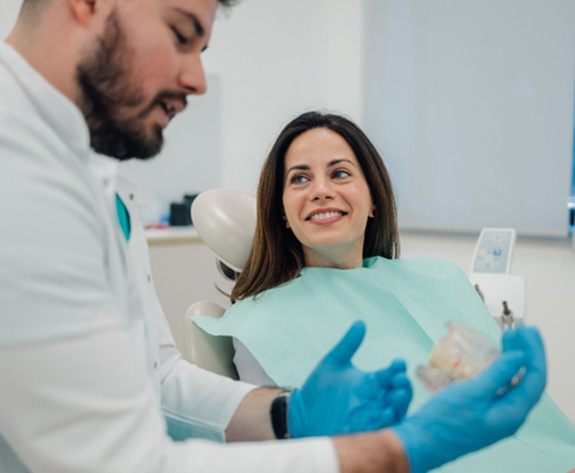
Modern dentures aren’t like the ones that you remember your grandparents wearing when you were a kid. Today, they are customized for each patient with the highest quality of materials available. To achieve a prosthetic that suits your smile perfectly, getting dentures requires a multi-step process. Read on to learn more about dentures, what they are comprised of, and the process necessary for your unique smile.
What Are Dentures Made Of?
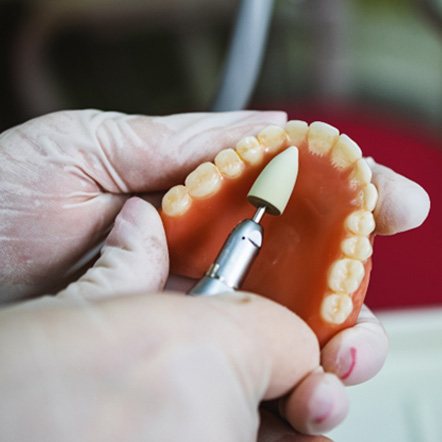
Dentures are comprised of two main parts – the base and the replacement teeth. Here is what each one looks like.
- Base: The base is the foundational structure of the replacement teeth. It can be made from various materials, but acrylic is popular because of how much it resembles natural gum tissue.
- Teeth: Most of the time, the replacement teeth that are attached to the base of the dentures are made from either resin or porcelain. These materials appear similar to real tooth enamel.
The Denture Creation Process
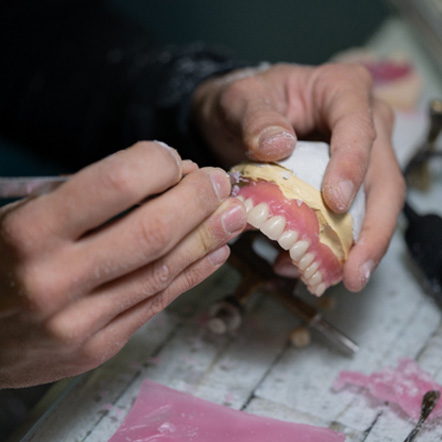
All dentures are customized, so everyone’s treatment is a little bit different. Here’s what this process might look like for you.
- Measurements are taken of the jaw, and impressions are made of the upper and lower gum tissue. These are used to create a plaster model of your mouth.
- The model is sent to the dental lab where your dentures are created. First, your replacement teeth are set in place using an articulator. Then, adjustments are made by the lab technician.
- The wax dentures are sent to your dentist for a fitting. If everything looks and feels good, your dentures are returned to the lab so the process can be finished.
- After the dentures have returned to the lab, the wax needs to be replaced with acrylic. To do this, the lab technician places the dentures in a flask. Plaster is poured in to maintain the shape of the dentures. The whole flask is then placed in hot water to melt away the wax.
- Holes are made in the teeth, and acrylic is inserted into the flask to replace the wax.
- The plaster is cut from the dentures with dental tools. Then, the dentures are placed in an ultrasonic bath to wash away the remaining texture.
- Excess acrylic is cut from the dentures. Then, they are polished to perfection.
- The dentures are returned to our practice. If you and your dentist are happy with the results, you can leave showing off a beautiful, complete smile.
Adjusting to Your New Dentures

When you first get your prosthetic, you may notice some soreness. This is normal as your mouth adjusts to your new dentures. Your dentures will start to feel more natural over time. When you first get dentures, it is ideal to stick to a soft diet and exercise your facial muscles. As you become comfortable eating with your dentures, you can start to introduce tougher foods. If discomfort persists or any concerns arise, don’t hesitate to reach out so we can help!